Trade Fair Preparation: A Six-Month Checklist for Exhibitors
What to arrange six months, three months, six weeks and one week before a trade fair — with a timeline, a task table and who owns what.
Updated 30 September 2026
Most trade fair problems are decided months before the doors open. The stand that arrives late, the colleague without an exhibitor pass, the key customer who had already filled their agenda: none of these are bad luck, they are planning that started too late.
This checklist works back from the first day of the fair. It is written for exhibitors — the company with the stand — not for the organiser, and it fits a fair of two to five days with a booth team of five to fifty people.
Why a fixed timeline pays off
Trade fairs are not one-off projects. In AUMA’s 2026/2027 exhibitor survey, German exhibiting companies expected to take part in 5.1 fairs on average, down slightly from 5.4 the year before. A company that repeats the same preparation five times a year gains a lot from a timeline it can reuse instead of reinventing it every time.
Space goes first. For large international fairs, stand applications and price deadlines come long before the event: for InnoTrans 2026 (22–25 September), the final price deadline was 25 August 2026. Whatever the fair, find the organiser’s deadlines first and plan backwards from them.
The timeline at a glance
What to do, when — and who owns it
| When | Tasks | Owner |
|---|---|---|
| 6+ months before | Set goals (meetings, leads, launches) and budget; decide on stand size and location; submit the stand application; note all organiser deadlines. | Marketing lead, management |
| 3 months before | Brief or book the stand builder; select the booth team; reserve hotel rooms; start inviting key customers. | Marketing, sales managers |
| 6 weeks before | Book customer meetings into slots and rooms; book travel; order exhibitor passes, parking and catering; agree how conversations will be logged. | Sales, event coordinator |
| 2 weeks before | Finalise the booth rota around the meetings; ship materials; prepare product demos and a one-page briefing. | Event coordinator |
| 1 week before | Brief the whole team (goals, key customers, who is where); send calendar invitations; check every person has a pass, a bed and transport. | Event coordinator, team |
| During the fair | Check in who is on the stand; log every conversation with an owner; hold a short debrief at the end of each day. | Whole team |
| First week after | Follow up every lead; send promised quotes and material; hold the evaluation meeting while memories are fresh. | Sales, marketing |
Five pitfalls that cost the most
- Planning the booth rota before the meetings — the rota then keeps clashing with appointments.
- Treating arrival times as booth times — a 10:00 landing is not 10:00 on the stand.
- Booking hotels last — in fair weeks, rooms near the grounds go early.
- No agreement on how leads are logged — business cards end up in five different pockets.
- No owner per task — “someone will arrange the passes” means nobody does.
Keep it in one place
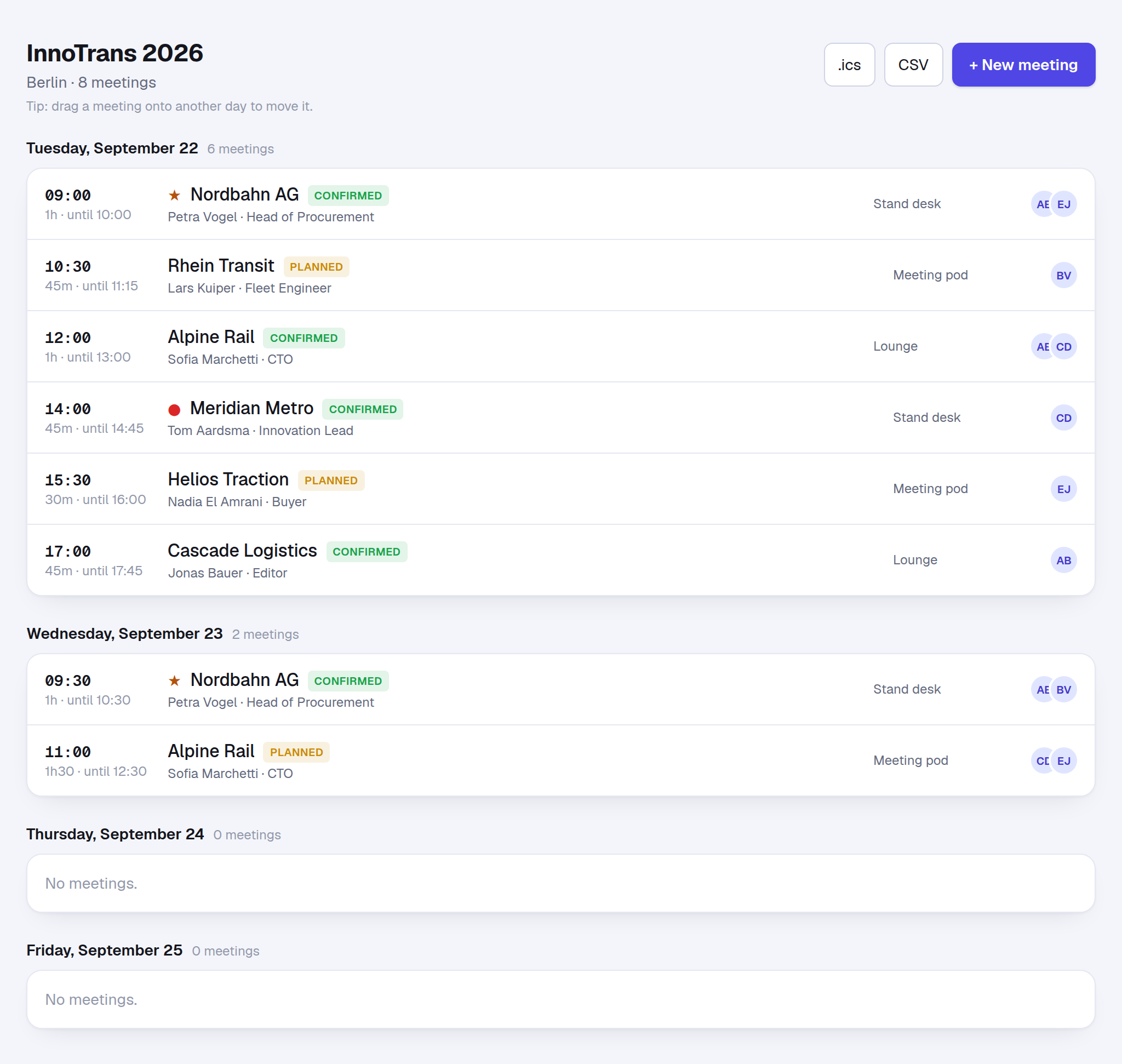
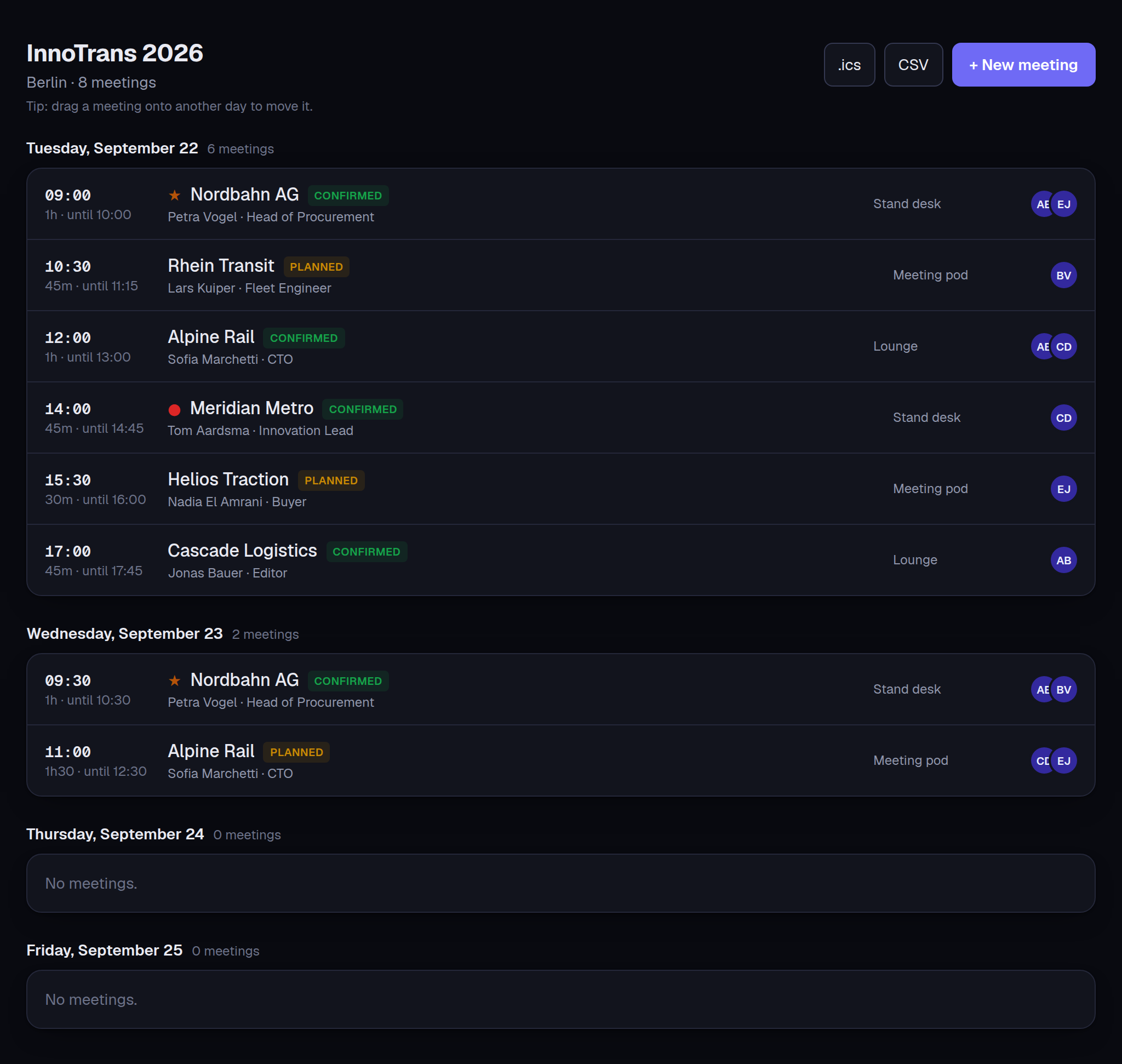
A timeline only works if the whole team sees the same version. Spreadsheets mailed around fork into copies within days. Put meetings, the booth rota, travel and hotels into one shared plan that updates for everyone.
Read next: how to plan booth staffing · how to plan meetings at a trade fair
Sources
Do all of this in one shared plan
BoothManager puts meetings, booth staffing, check-in, travel and leads in one plan that updates live for the whole team. One price per company, hosted in Frankfurt.